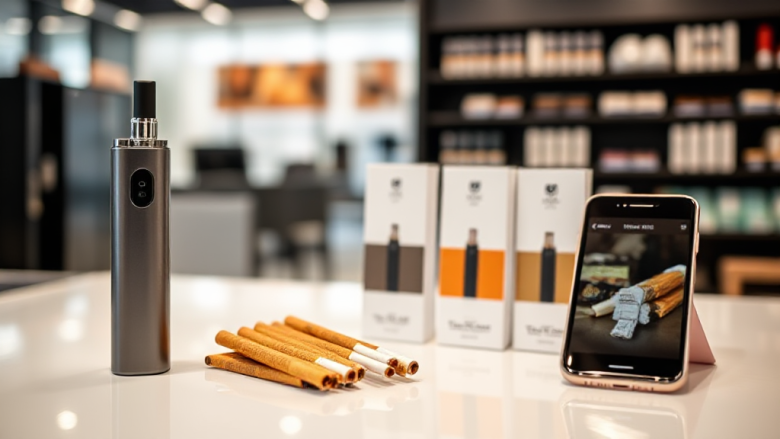
TEREA Sticks and ILUMA in Europe: What You Need to Know About Regulations
Disclaimer: The information below is a general overview. Tobacco and nicotine laws change frequently and vary by country, region and even municipality. Nothing here is legal advice, and rules that apply in one country may not apply in another. Always verify current requirements with local authorities before you buy, carry or travel with heated tobacco products.
Imagine you are an adult smoker who has switched to a heated tobacco system. You live in one European country, you are flying to another for a long weekend, and you have packed your device and a few packs of sticks in your carry-on. At the airport, a question crosses your mind: is this actually allowed where I am going, and can I legally bring these with me? For users of TEREA sticks and ILUMA devices, that question has become more complicated as European countries tighten and harmonise their tobacco rules.
This article walks through the practical legal picture for adult consumers. It covers age restrictions, advertising bans, flavour rules, cross-border purchasing and travel limits, with country-specific sections and a summary table. If you are shopping online, it also helps to know where compliant European sellers fit into the picture — for example, retailers such as levia sticks espana operate within the same regulatory environment that governs heated tobacco sales across the EU.
How Heated Tobacco Is Classified in Europe
The first thing to understand is that heated tobacco products are not treated the same way as combustible cigarettes, and they are not treated the same way as e-cigarettes. Under the EU Tobacco Products Directive (TPD), heated tobacco products fall into their own category. They are tobacco products, but they are defined separately because they are consumed through a heating process rather than burning.
This classification matters because it determines which rules apply. In practice, most EU member states apply the following to heated tobacco sticks and devices:
- Minimum age of sale, usually 18, in some countries 21.
- Restrictions on advertising, promotion and sponsorship.
- Health warning requirements on packaging.
- Reporting and notification obligations for manufacturers and importers.
- Rules on ingredients, including flavour additives.
Because heated tobacco is a tobacco product, it is generally subject to tobacco excise duties as well. That is one reason prices and availability differ so much between countries. It is also the reason a pack bought legally in one country may not be legal to resell in another.
Devices themselves are usually treated differently from the sticks. The hardware is often regulated as a consumer electronic product, while the consumable sticks carry the tobacco-specific rules. That split is important when you travel: the device may raise no questions at all, while the sticks may be subject to duty-free limits and local restrictions.
Age Restrictions and Age Verification
Across the European Union, the minimum age for buying tobacco products is 18 in most member states. Some countries have raised it to 21, and a few have considered doing so. Because heated tobacco is classified as a tobacco product, the same age floor applies.
For online sellers, this creates a practical requirement: age verification. Reputable European shops must confirm that a buyer is of legal age before completing a sale. That is why you will often be asked for a date of birth, an ID check or an age-verification step at checkout. It is not a formality — it is a legal obligation in most jurisdictions.
For consumers, the implication is simple. If you are buying online, expect to verify your age. If you are buying for someone else, be aware that supplying tobacco products to a minor is an offence in most European countries, regardless of who pays. And if you are travelling, remember that the age limit in your destination country may be higher than the one you are used to at home.
Age rules also affect delivery. Some couriers and postal services refuse to handle tobacco deliveries, or require an adult signature on receipt. This is another reason to buy from established sellers who understand the logistics and compliance side of the market.
Advertising, Promotion and Display Bans
One of the most consistent features of European tobacco law is the ban on advertising, promotion and sponsorship. For heated tobacco, these bans generally apply in the same way they do for cigarettes. That means:
- No advertising on television, radio, print media or most online platforms.
- No promotional giveaways, sponsorship of events, or brand partnerships aimed at the public.
- Restrictions on point-of-sale display in many countries.
- Limits on how products can be shown in retail environments.
For online shops, the rules are nuanced. A retailer may be allowed to present products on its own website, with age gates and disclaimers, while paid advertising and social media promotion are heavily restricted or prohibited. This is why you rarely see heated tobacco brands running conventional ad campaigns in Europe. Instead, information tends to come from retailers, user communities and product documentation.
For consumers, the practical effect is that you should be sceptical of any seller making health claims or promotional promises. Legitimate retailers stick to factual product information, because overstepping the advertising rules can lead to fines and shutdowns. If a website looks more like a marketing campaign than a shop, that is a warning sign.
Flavour Rules and Ingredient Restrictions
Flavour regulation is one of the fastest-moving areas of European tobacco law. Several countries have banned characterising flavours in tobacco products, and heated tobacco has been drawn into that debate. The rules differ significantly between member states.
Some countries have restricted menthol and other flavour additives in heated tobacco sticks. Others have left a broader range available. This creates a patchwork situation where the same product line may be sold in one country but not in another, and where a flavour that is legal at home may be restricted at your destination.
Ingredient reporting is also part of the framework. Manufacturers and importers must submit information about the ingredients used in their products, and regulators can act on that data. For consumers, this means that the range of sticks available in a given country is not just a commercial decision — it is a regulatory one.
If you are travelling or buying cross-border, check whether the specific variant you use is permitted locally. A product that is perfectly legal in one member state can be non-compliant in another, and the responsibility for carrying it generally falls on the person transporting it.
Country-Specific Overview
The table below summarises the general position in several key European markets. Treat it as a starting point, not a definitive legal reference. Age limits, flavour rules and travel allowances are subject to change, and local enforcement can vary.
| Country | Minimum age | Flavour restrictions | Cross-border notes |
|---|---|---|---|
| Spain | 18 | Flavours restricted in line with EU rules; enforcement active | Personal imports subject to duty-free limits; resale requires authorisation |
| Italy | 18 | Flavour additives restricted; heated tobacco regulated as tobacco | Strict duty-free allowances; commercial import needs a licence |
| Germany | 18 | Characterising flavours banned for tobacco products | Personal use allowances apply; advertising heavily restricted |
| France | 18 | Flavour rules tightened in recent years | Duty-free limits enforced; online sales face strict controls |
| Poland | 18 | Flavour restrictions apply to tobacco products | Popular market for heated tobacco; travel limits apply |
| Portugal | 18 | Flavour rules aligned with EU framework | Personal imports limited; resale prohibited without licence |
Two patterns stand out. First, age limits are broadly consistent at 18, with a few exceptions. Second, flavour and cross-border rules vary much more, which is where most travellers and online buyers run into trouble.
Spain deserves a specific mention because it is a large market with a well-developed retail network. Adult consumers looking for compliant options often search for levia sticks espana to find products that are sold through legitimate channels, with age verification and clear product information. That is a reasonable approach: buying from a retailer that operates within the local framework reduces the risk of unknowingly purchasing non-compliant goods.
Cross-Border Purchasing and Travel Rules
Cross-border purchasing is where the legal picture gets genuinely complicated. There are two separate questions: can you buy from a seller in another country, and can you carry the product across a border yourself?
On the purchasing side, EU rules allow distance selling of tobacco products in principle, but member states can impose additional requirements. Many countries require the seller to register locally, to verify the buyer’s age, and to comply with local labelling and tax rules. Some countries have effectively restricted or banned cross-border online sales of tobacco products altogether.
On the travel side, personal imports are usually allowed within duty-free limits. If you exceed those limits, you may be liable for excise duty, and in some cases the goods can be seized. The limits are not the same as for alcohol or ordinary consumer goods, and they are enforced more strictly than many travellers expect.
A few practical points are worth remembering:
- Duty-free allowances are for personal use, not for gifting or resale.
- Keep receipts if you are carrying a meaningful quantity, to show where and when you bought the product.
- Check the destination country’s rules before you fly, not after you land.
- If you are buying online from another country, confirm that the seller ships to your location and complies with local rules.
There is also the question of device compatibility. ILUMA devices and TEREA sticks are designed as a system, and the sticks are not interchangeable with older heated tobacco platforms. If you are travelling, it is worth confirming that the sticks you rely on are available at your destination, or that you are carrying enough for your trip within the legal allowance.
Buying Online Safely and Legally
Online purchasing has become the default for many adult consumers, partly because of convenience and partly because local availability can be limited. But not every online seller operates within the law, and the consequences of buying from a non-compliant source can include receiving counterfeit products, having a shipment seized, or facing unexpected tax demands.
Here is what to look for in a legitimate European seller:
- Clear age verification at checkout.
- Transparent contact details and business information.
- Realistic delivery times and information about which countries are served.
- Secure payment options, including recognised card processors.
- No health claims, no exaggerated promises, and no pressure tactics.
It also helps to understand what the seller can and cannot do. A compliant shop will not sell to minors, will not ship to countries where the sale is prohibited, and will not market products in ways that breach advertising rules. If a website seems to ignore all of these constraints, that is a strong signal to look elsewhere.
For consumers in Spain and across Europe, the safest route is to buy from sellers who are explicit about their compliance posture. That includes stating which regulations they follow, how they verify age, and how they handle cross-border delivery. It is not the most exciting part of the shopping experience, but it is the part that protects you.
FAQ
Can I bring TEREA sticks from one European country to another?
In many cases yes, but within duty-free limits and for personal use only. The exact allowance depends on the country you are entering, and exceeding it can trigger excise duty or seizure. Always check the destination country’s rules before travelling, and keep proof of purchase if you are carrying more than a small quantity.
Is it legal to buy heated tobacco sticks online in Europe?
It depends on the country. Some member states allow distance selling with age verification and local registration requirements, while others restrict or prohibit it. A compliant seller will tell you which countries it ships to and will verify your age before completing the sale. If a shop ships everywhere without checks, that is a red flag.
Are flavours restricted for heated tobacco in Europe?
Flavour rules vary by country and have been tightening. Several member states have banned characterising flavours in tobacco products, and heated tobacco has been included in those measures in some jurisdictions. The same product line may be available in one country and restricted in another, so check local rules if you are buying cross-border.
What happens if I buy from a non-compliant online seller?
You risk receiving counterfeit or non-compliant products, having your shipment stopped at customs, or facing unexpected tax charges. In some cases, the products may be destroyed. Buying from an established seller that follows local rules is the most reliable way to avoid these outcomes.
Do age restrictions differ across Europe?
Most EU member states set the minimum age for tobacco sales at 18, but a few have raised it to 21. Because heated tobacco is classified as a tobacco product, the same age floor generally applies. If you are travelling, check the local age limit, as it may be higher than in your home country.
Can I use an ILUMA device with other brands of sticks?
ILUMA devices are designed to work with TEREA sticks as part of a matched system. Other sticks are generally not compatible, and using incompatible products can damage the device or produce a poor experience. Always use the consumables intended for your specific device.
Regulation in this area is not static. European countries continue to review their tobacco laws, and heated tobacco is frequently part of those reviews. For adult consumers, the sensible approach is to stay informed, buy from compliant sellers, and check the rules before you travel or order across a border. That way, you can focus on using your device rather than worrying about whether you are on the right side of the law.